News
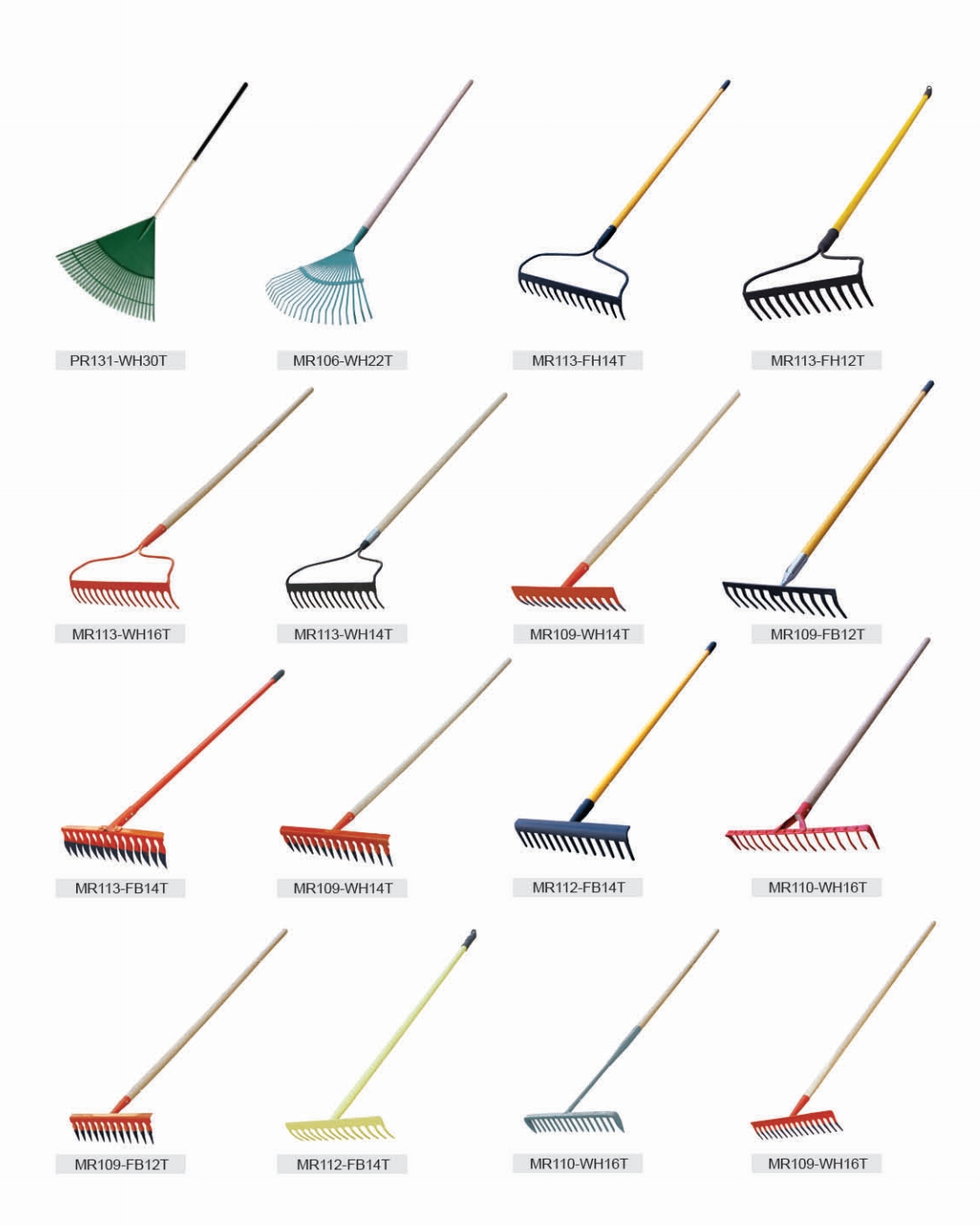
Farm rake is not just a random purchase! Different scenarios require completely different types. If you're tilling a soft vegetable field, choose a lightweight flat rake (like a big comb) to save energy; to deal with hard, compacted soil, you need to use a spring rake with curved tines; if you're cleaning up leafy weeds, a wide raking rake is much more efficient. Remember: buying the wrong tool is equal to spend money for nothing but also cost waist!
Material determines the life:
Rusty farm rake with two years on the scrap? Recognize the high-carbon steel material! The best choice for the handle is ash wood or fiberglass, which is crack-proof and shock-absorbing. Don't buy hollow steel tubing for cheap, it will bend when you push it.
Size to match:
single operator choose 60-80 cm wide farm rake the most smooth, tractor-drawn have to choose more than 1.5 meters. Small people suggest that the handle can be adjusted style, or a day's work is done arms can not lift up.
Detailed design:
The farm rake with quick-release function is easier to clean, and the rake teeth with serrated edges are easier to hook the weeds than the rounded ones. Look at the joints to see if there is a reinforced steel plate - this is the most likely to break!
Don't believe the “all-purpose rake” propaganda! There is no one farm harrow that can handle both deep plowing and finishing at the same time!
Online shopping should look at the physical comparison picture, many merchants use PS to rake teeth P particularly dense, the actual hand sparse!
It is important to try after rain! Some rakes look strong, a wet mud can not hang soil!
After using the farm rake must be rinsed clean soil, dry and then coated with a little oil to prevent rust. When stored in winter, it is best to hang up, to avoid deformation of the handle by moisture. If you find that the rake teeth loose, immediately fixed with epoxy resin glue, and so on broken and then repair is too late!

 Sitemap