News
Those who are new to farm work will always worry about the choice of tools. Today we will talk about the most suitable for beginners in the farm all-purpose tool - small machete. Don't look at its small size, but it is a good helper for clearing the land and pruning branches. Choosing the right machete can make your farm work twice as easy.
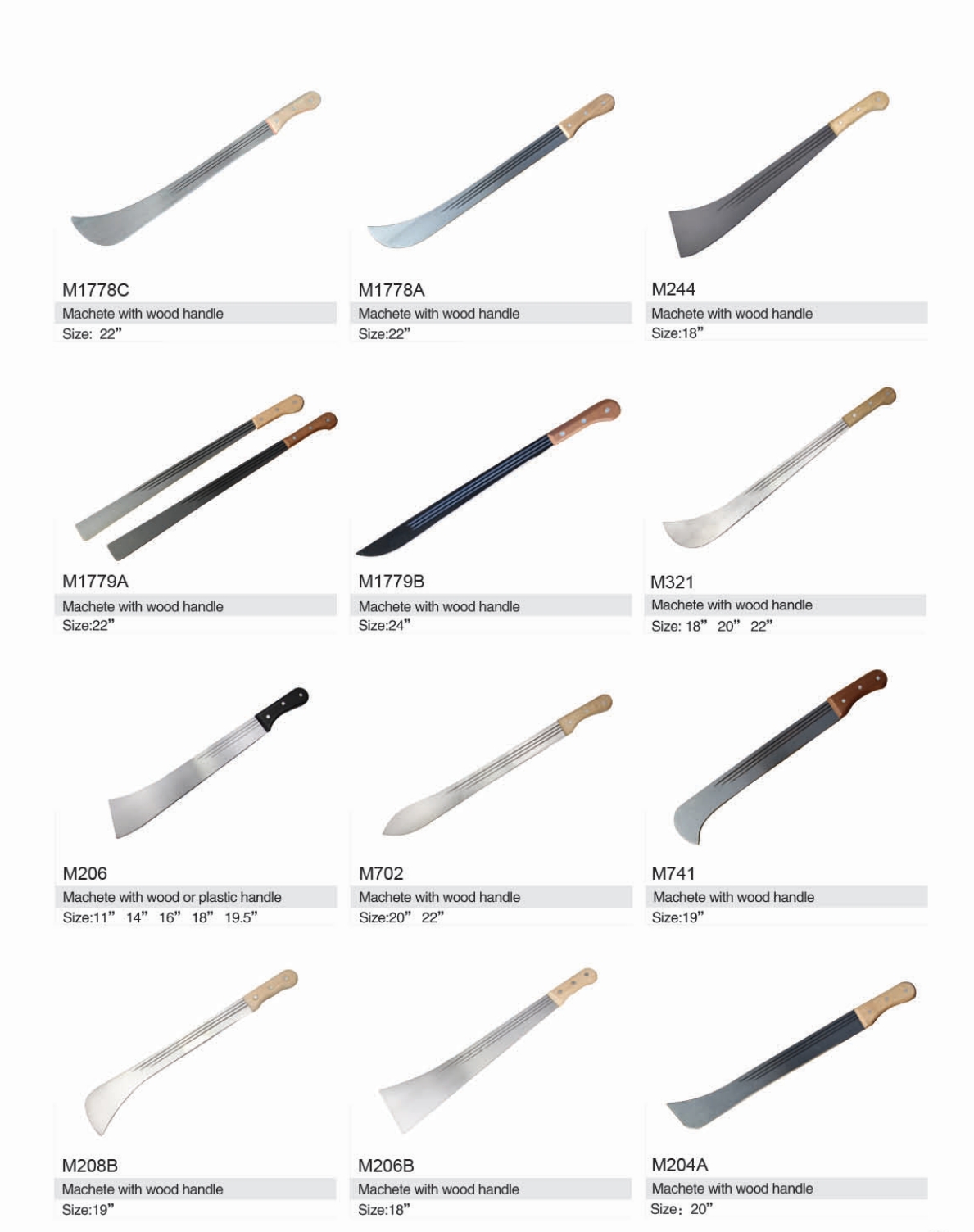
Why is a small machete the best choice for a novice farmer?
A small machete has irreplaceable advantages over a large machete or axe. It is usually between 30-40 centimeters in length and weighs around 500 grams, which makes it especially suitable for newbies who are not very strong.
I've seen many newcomers to the farm start out with a heavy machete and end up with sore wrists within half an hour of work, which in turn affects their productivity.
Another advantage of the small machete is its safety. It has a moderately curved blade, which is not as slippery as a straight-edged knife, nor is it as difficult to control the force of a machete.
I remember last year when I helped my neighbor, Uncle Wang, tidy up his orchard, the small machete he had just purchased easily solved the vines that were tangled in the fruit trees without accidentally injuring the bark of the trees.
Material should be reliable: the best choice of high-carbon steel blade, the material hardness is moderate and easy to polish. Don't buy a tin knife on the cheap, I've seen someone's machete cut a bamboo pole on the edge of the roll.
The handle should be non-slip: it is recommended to choose a wooden handle with a rubberized cover. Last week, I went to Aunt Li's house to help her, and her new plastic machete slipped when it got wet, almost hurting her foot.
Balanced weight: A good machete should have a “heavy head and light handle” design. The machete that has been used for five years on Mr. Zhang's farm is a typical example of a machete that can be wielded with little effort.
Beginners should pay attention to the angle control. A 45-degree angle is the most efficient way to cut branches, and for weeding, use a “peeling” rather than a “chopping” motion.
Last week, when instructing a new intern, I found that using a machete correctly can increase efficiency by at least 30%.
Maintenance is simple: dry the blade after each use and wipe it with cooking oil once a month. This is how we take care of the machetes on our farm, and they are still as good as new after three years.
Cleaning up weeds: the small machete is especially effective in dealing with weeds half a man's height, and is less laborious than a scythe.
Pruning branches: branches with a diameter of less than 3 centimeters can be easily dealt with.
Cutting paths: the machete is more flexible than the machete when cutting through bushes.
Handling vines: the curved edge of the blade is especially suited to handling tangled plants.
Remember, even the best machete needs to be used correctly. We recommend that newcomers practice their hand on soft materials first, and then handle hard materials once they have mastered the strength.
When we train newcomers on our farm, we always start with a pumpkin vine to practice the basic techniques of the machete.

 Sitemap